Could Magic fit
in an
ordinary deck?
The question that started Superjack: The Game, a two-player battle with the cards you already know.
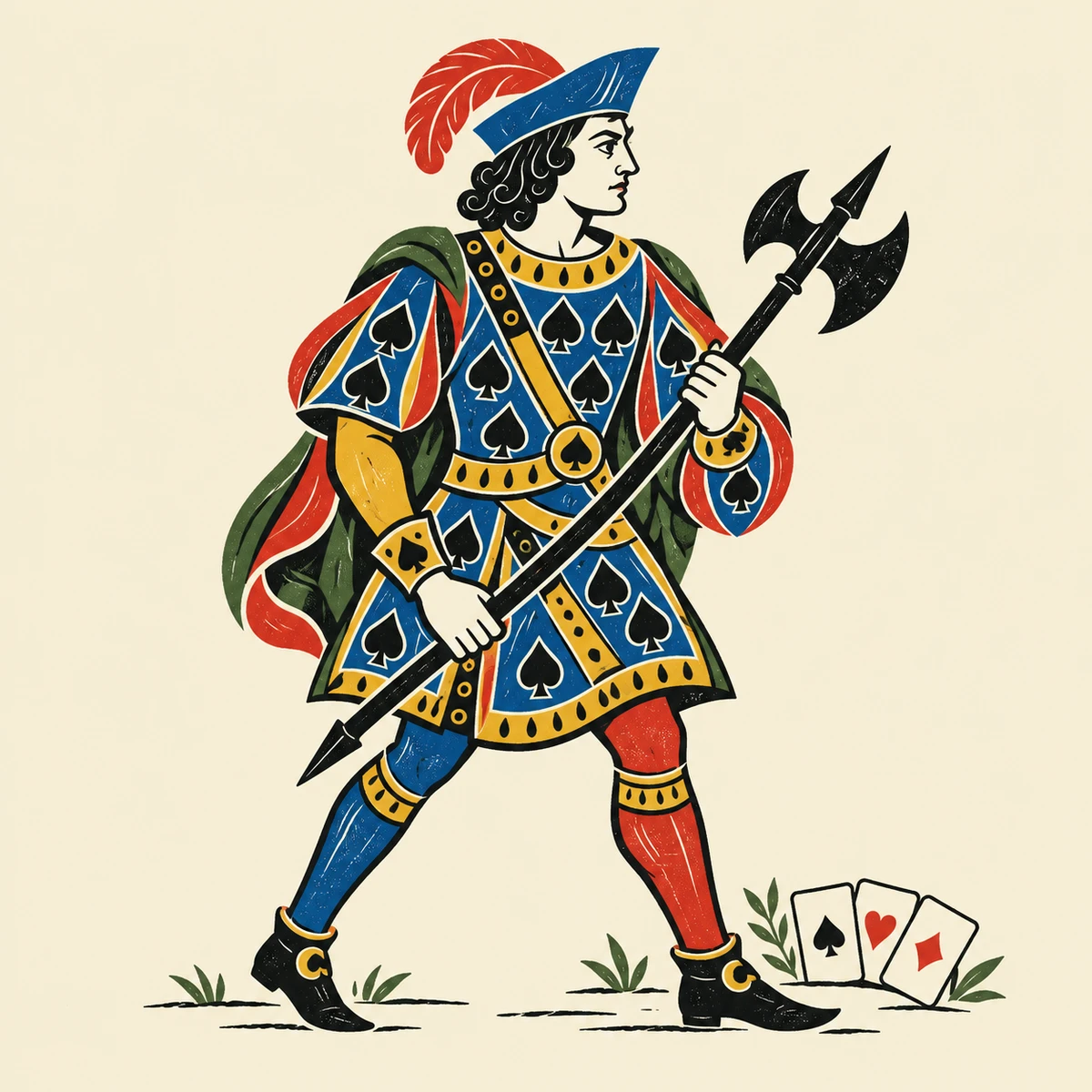
A familiar Jack, ready for a different game.
A Jack looks like it ought to be able to fight.
Put it beside a Queen and a King, and the beginnings of an army are already on the table. The number cards could pay for it. An Ace ought to be trouble. If you’ve ever found yourself inventing rules while shuffling a deck, you can probably see where this is going.
Superjack: The Game began with a question: could we make something like Magic: The Gathering using standard playing cards? We wanted creature battles and the chance to answer a move with a move of our own. The pleasure of watching an opponent commit to an attack, then being able to say, “Hang on.”
That question led to playing, testing, and changing the rules. The ordinary deck kept offering ideas of its own. Pairs could strengthen creatures. Straights could cast spells. Jacks could stack together. Those familiar patterns became part of how you fought, and Superjack developed into its own game.
To play, you each take a standard deck and remove the 8s, 9s, 10s, and jokers. That leaves forty cards apiece. You start at twenty health and try to bring your opponent to zero. The number cards, 2–7, are gems: turn them sideways, or tap them, for energy. Spend that energy to bring your creatures into play.
The Jacks show how far the game went with that idea. One Jack is a small 1/1 creature: it deals one damage and dies after taking one. Stack two Jacks into one creature and you have a 2/2. Three make a 4/4. Get all four together and you’ve built an 8/8 Superjack with Trample: combat damage beyond what’s needed to kill its blockers hits the defending player. That’s where the name comes from. It’s also a reason to keep an eye on your opponent’s Jacks.
An Ace gives you a different kind of opportunity. Pay three energy of its color and choose: play it as a creature, destroy an opposing gem, or cancel another Ace before it takes effect. It can even arrive during your opponent’s combat in time to block. The Ace in your hand might be your next attacker or your answer to theirs.
Even a two or three can become a Fireball: tap the gem, then sacrifice it by putting it in your discard pile. You get damage now, at the cost of the energy it could have supplied next turn.
Both players bring the same set of cards. You can teach a friend knowing they have every tool you do. Then you shuffle and find out what each of you makes of your hand. Your friend finds a use for a card you’d barely considered, and you start planning the rematch.
You can try Superjack free in your browser, or use two ordinary decks and the free rules. Our illustrated editions give the game its own artwork and reminders on the cards; everyone plays by the same rules.
And if this started with you searching for a way to play something like Magic with regular cards, welcome. We know the feeling. It turned into a whole game.