
The Goblin King gets a rules box.
CJ and I had gotten bored of Pokémon Snap. He asked if I wanted to go to the game store for more Magic cards.
 SUPERJACKTHE GAME
A creature battle with ordinary playing cards. Build with gems, keep an Ace in reserve, and see what your friend does with the same forty cards.
With a friend or a bot. In your browser.
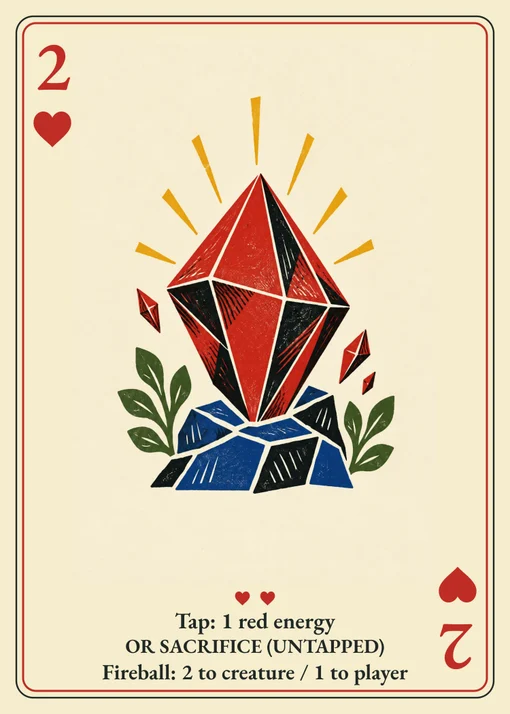
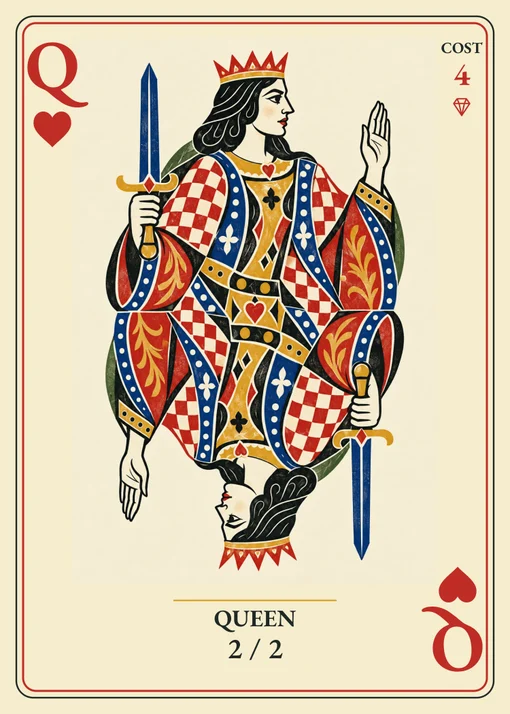
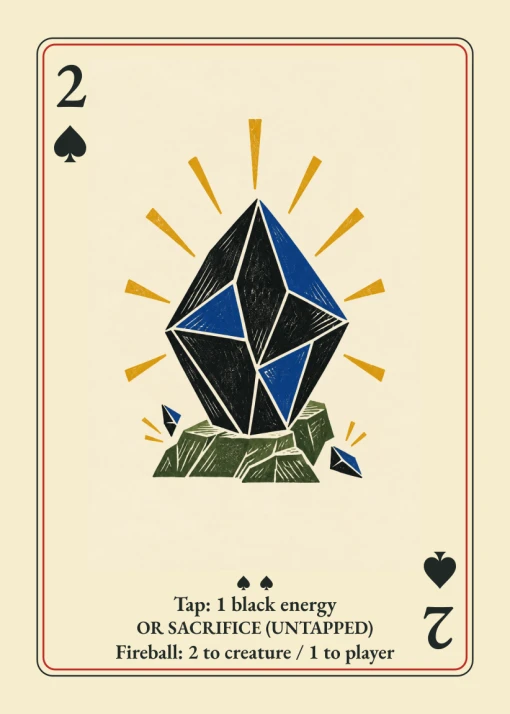
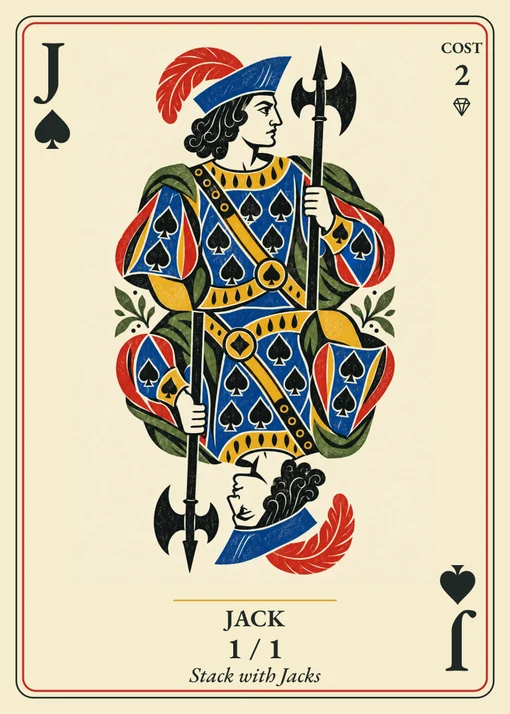
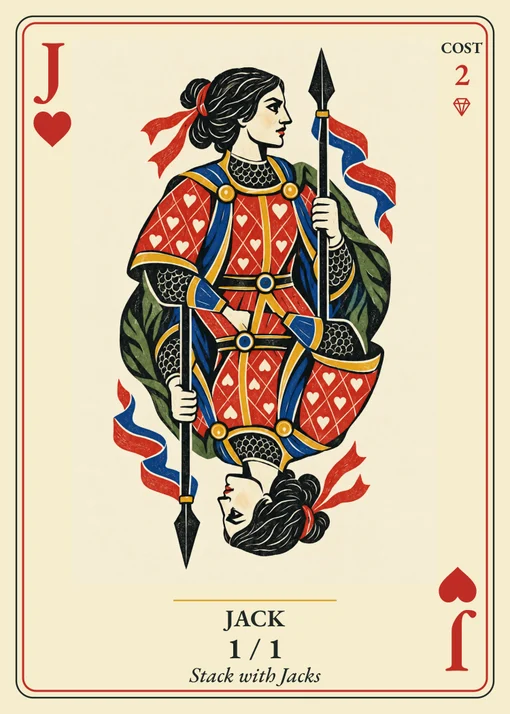
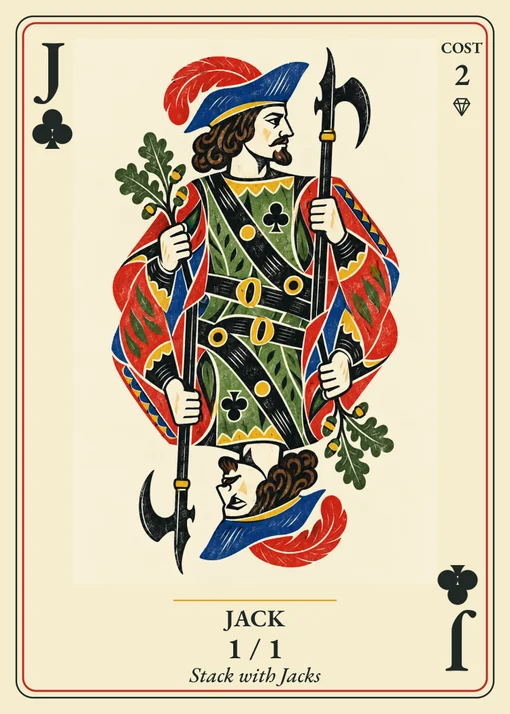
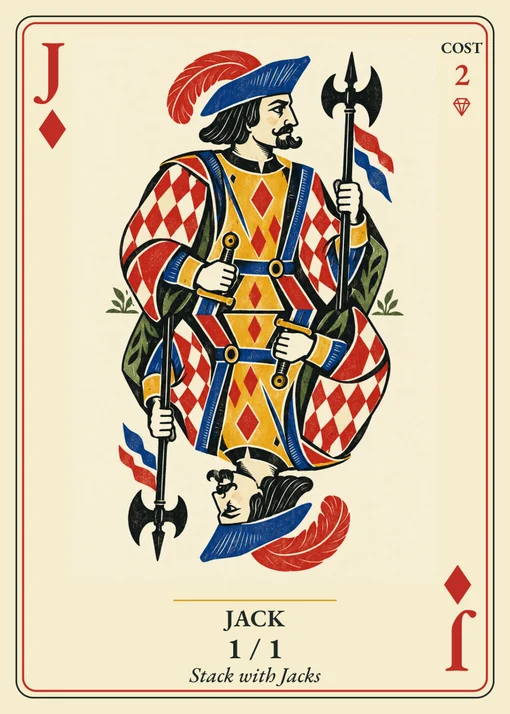
A standard deck. An unfair amount of strategy.
Two players · Twenty health eachChoose Play Online, create a game, and send your friend the invite link. Games also appear in the public lobby.
Or play a bot while you learn. Both decks contain the same cards; the shuffle gives each of you a different hand.
Open the game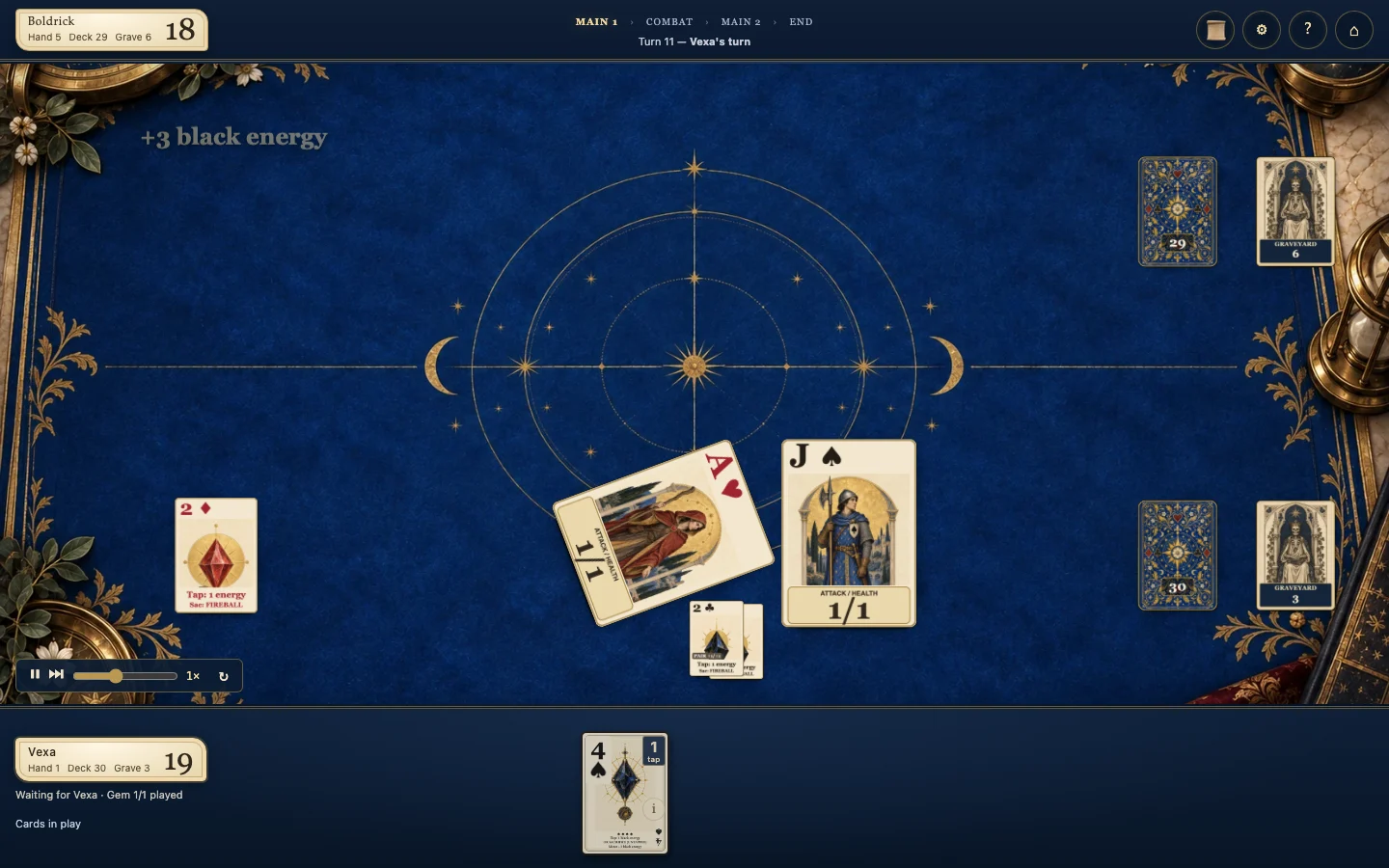
Number cards supply energy.
Face cards enter the battle.
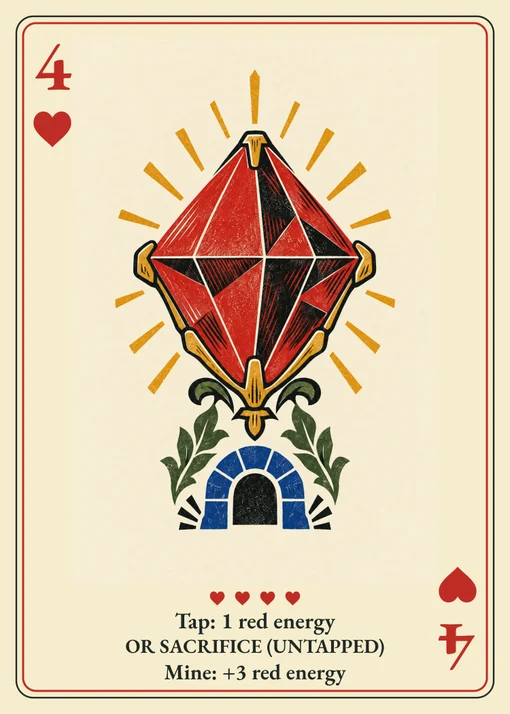
Twos through sevens are gems. Play up to one during your turn. Tap it for one energy of its color, or tap and sacrifice it for its rank’s ability.
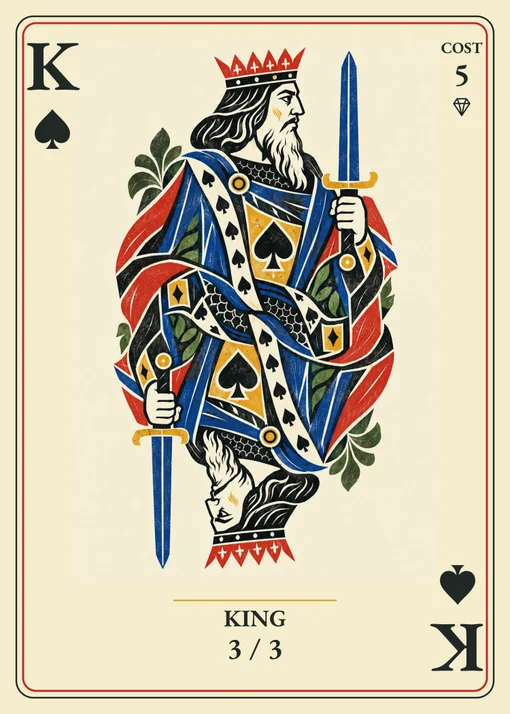
Summon creatures with energy of their color. Attack, block, and build your position. Aces can arrive as surprise creatures or be played as spells.
Meet the creatures in the rules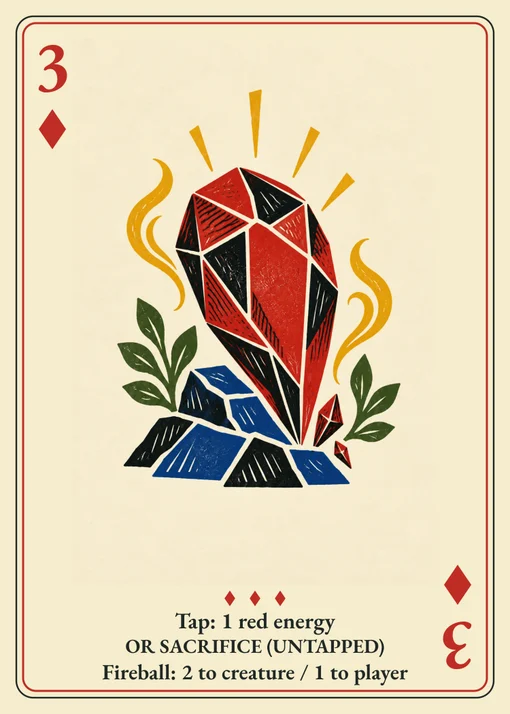
Tap three untapped, consecutive gems of the same color to gain one life. Four let you draw, then discard. Five return a creature; six take control of one. Those last two also cost a gem from the straight.
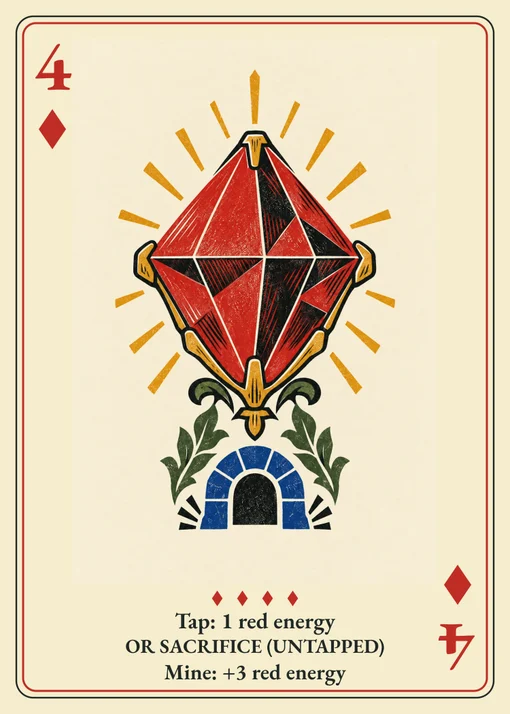
Two gems of the same rank and color can equip to a creature for +1/+1. This pair of red fours turns a 1/1 Jack into a 2/2 until your next untap step.
And that’s just your opening hand. There are counters, sacrifices, royal charges…
Read the full rulesStories from the people who made Superjack, and a closer look at the cards on the table.
All the storiesCJ and I had gotten bored of Pokémon Snap. He asked if I wanted to go to the game store for more Magic cards.
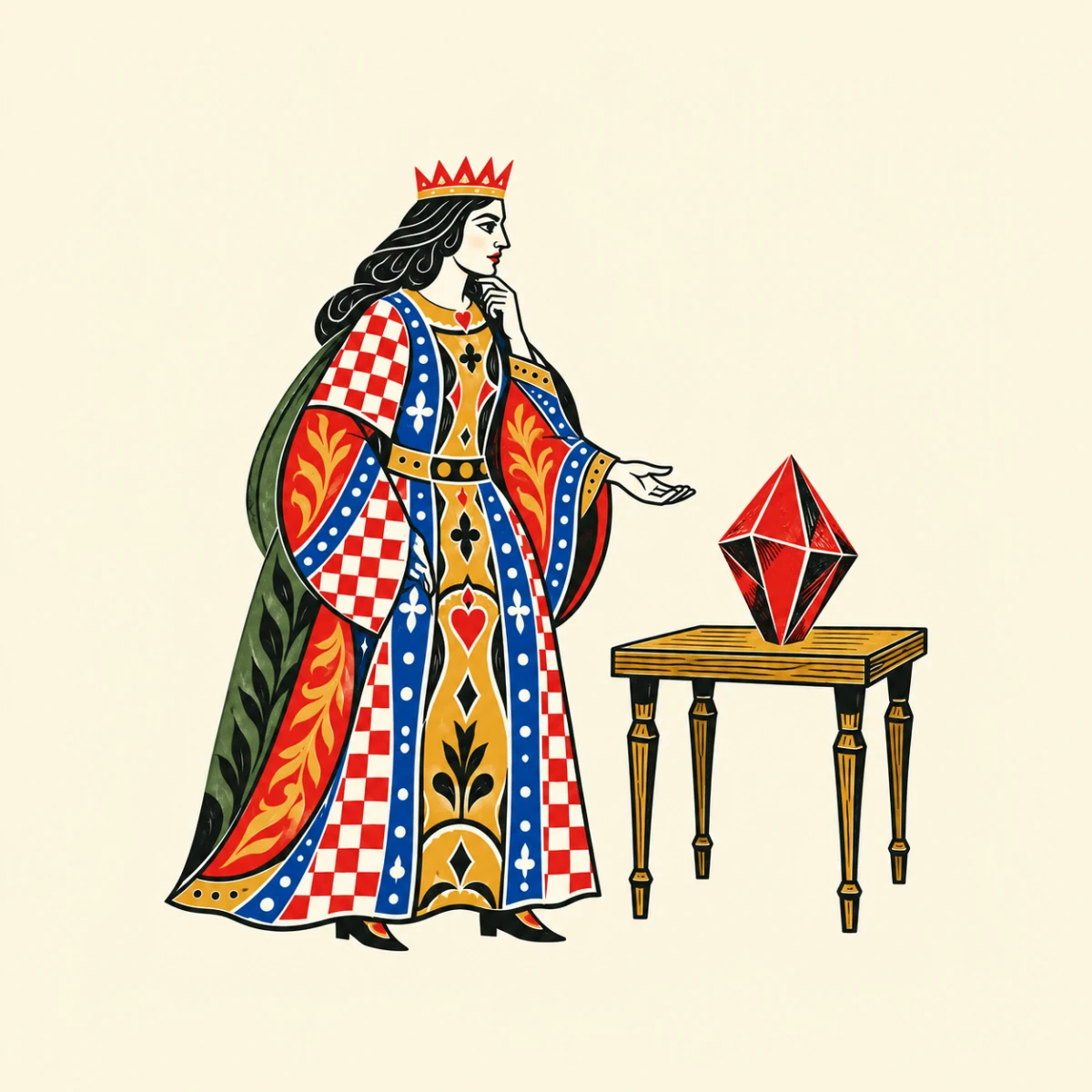
One gem for a creature that cost four energy looks like a good trade. Then you need that gem next turn.
All available to play online.
Physical editions: ask about availability.
Look inside Italian folk-print figures, bright stencil colors and double-ended courts.
 Look inside
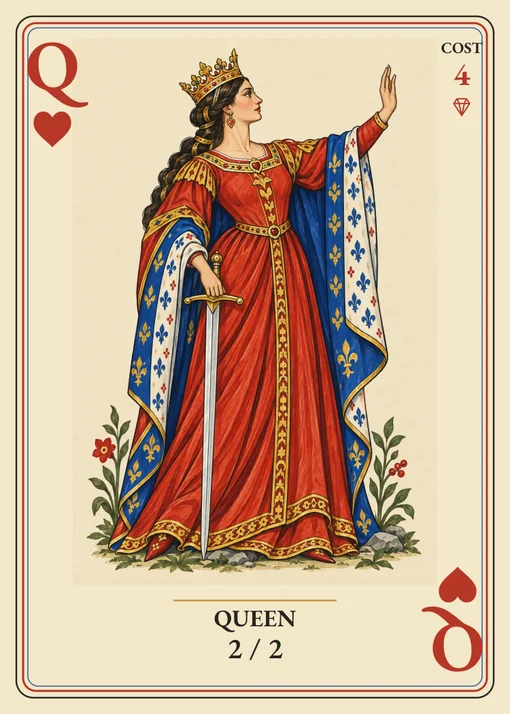
 Expressive painted courtiers and botanical ornament on warm paper.
 Look inside
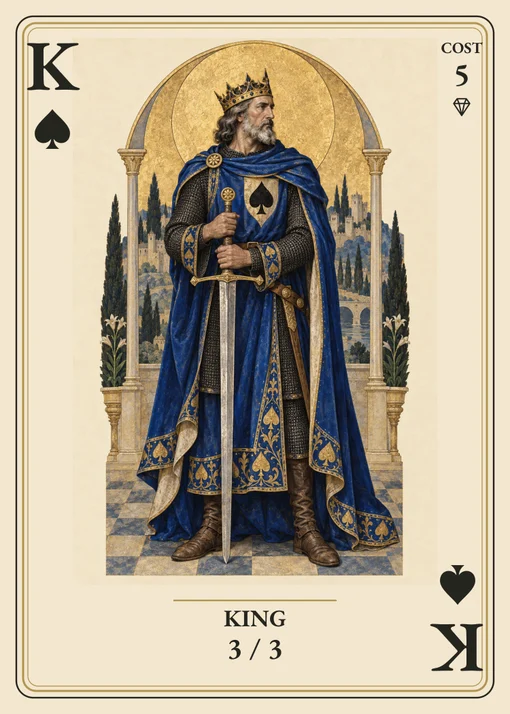
 Celestial courts, lapis skies and illustrated gold.
Take a closer look at the artwork.
Play these art editions online now. Ask us about physical availability.
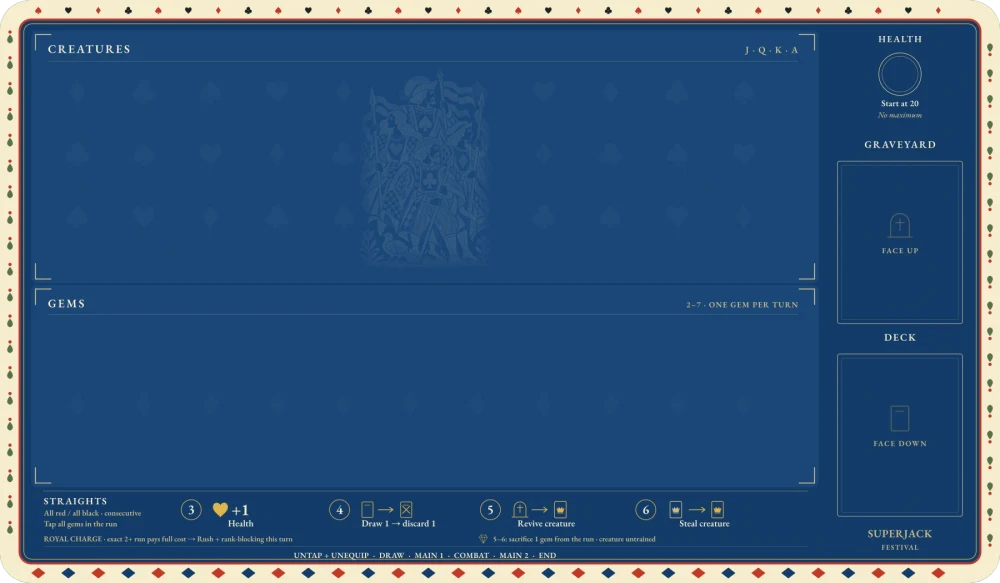
Matching playmats give your cards a home and keep a straight reference close at hand. Ask us about availability for your table or store.

In seventh and eighth grade, we played in the school library and the back of Ms. Geiger’s classroom. Eric was part of that group. Years later, he would be the friend I made Superjack with.
We spent years making games with ordinary playing cards, then started asking how the creature battles we loved could fit into a deck. Superjack took shape one game, argument and rule change at a time.
Read how Superjack beganOne ordinary deck per player. Set aside the 8s, 9s, 10s, and jokers. You each have the same forty cards.
Twenty health each. Shuffle, draw five cards, and choose the first player at random.
Learn the rules together, build your first army, and see what your cards can do.
Open the official rulesRun a demo, start a club, or bring something new to your regular table. Superjack starts with cards people already know and gives them a reason to stay.
No. You need one standard deck per player. Remove the 8s, 9s, 10s, and any jokers to make each 40-card deck. Official decks give the game its own artwork and card reminders; everyone plays by the same rules.
Everyone begins with an identical set of cards. There are no boosters or rare cards to chase. Your decisions and the shuffle make each game different.
If you enjoy planning ahead, making the most of your hand, and finding a clever response, there’s a lot here to explore. Superjack combines creature combat with familiar pairs, straights, and suits. Try it free in your browser or bring two decks to your table.
Many traditional 40-card Italian and Spanish decks have a compatible rank structure. You’ll need to agree on a mapping for their suits, the two game colors, and their court cards. Not every regional pack is the same; a standard French-suited deck is the simplest way to follow the official rules directly.
Explore Festival, Painted Court, and Gilded Oracle in the card galleries. You can play all three art editions online today. For a physical deck, tell us which edition you love and how many you have in mind; we’ll help with availability and ordering.
Please do. Superjack is what it is because people played it, loved it, and told us what they thought. Use the feedback button to share a suggestion or ask about decks and demos. For a reply, include your email or phone number.