Is that Queen
worth a
gem?
A look at Fireballs, Jack stacks and the decisions that make the same forty cards worth another game.
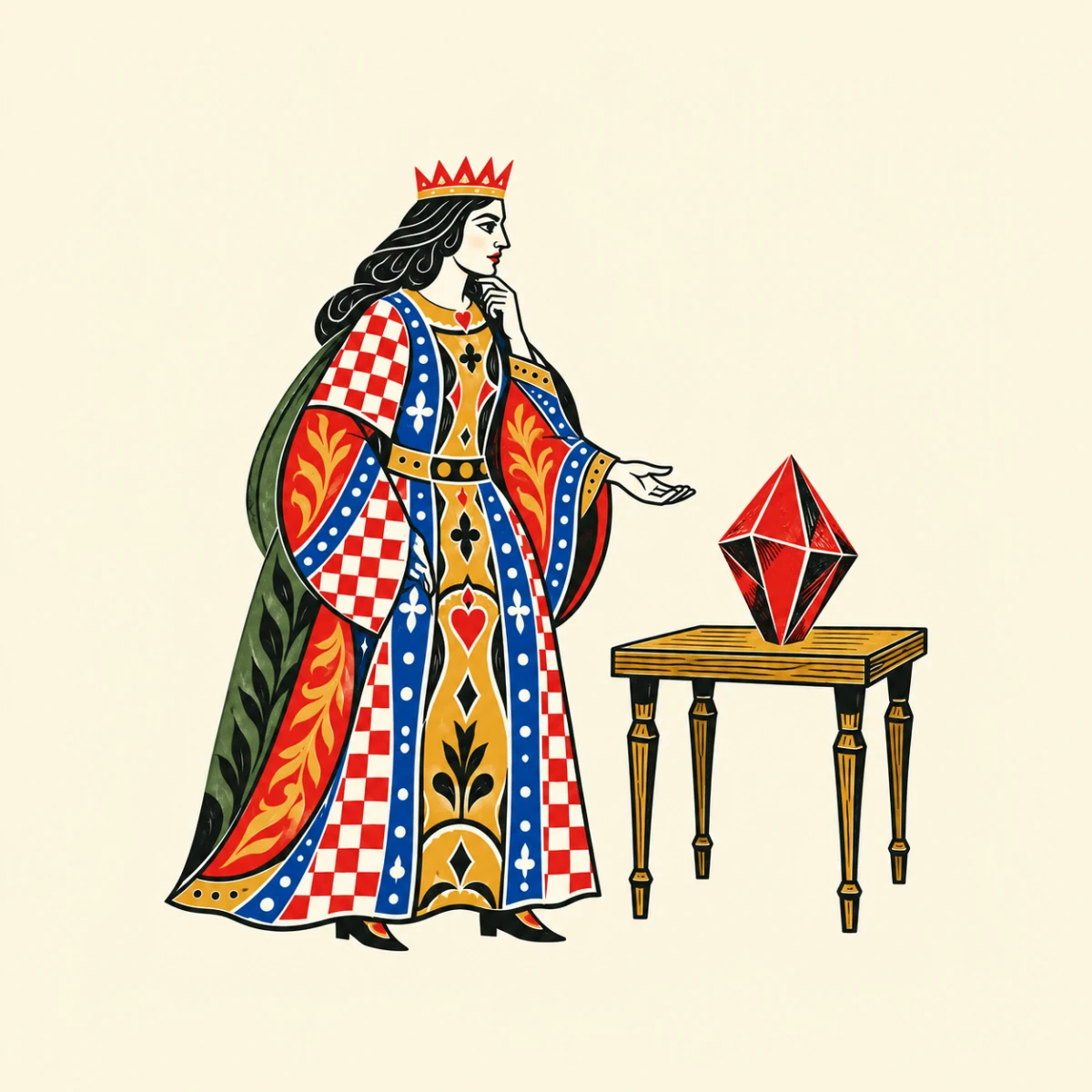
The Queen is worth four energy. The gem may be needed next turn.
A two can kill an unequipped Queen in Superjack. Tap the gem, sacrifice it, and its Fireball deals two damage—enough for a 2/2 creature, provided nothing changes before it resolves. One gem for a creature that cost four energy looks like a good trade.
The gem was also a source of energy for later turns. Removing the Queen might open an attack now and leave a creature stuck in hand next turn. The cost of the Fireball depends on what the rest of the cards are doing.
For anyone new to Superjack: each player uses a separate standard deck with the eights, nines, tens and jokers removed. That leaves forty cards each, including the same Jacks, Queens, Kings and Aces. Twos through sevens are gems. Tapping one makes one energy of its color; spending energy brings creatures into play. Each player starts at twenty health and tries to reduce the other to zero.
Magic’s newly announced Corn Maze Superdrop goes on sale October 12, with Labyrinth, KPop Demon Hunters and Marvel: Zombies treatments of existing cards. It is a good excuse for a card-game question that matters after a reveal: what keeps a card interesting once everyone knows what it does?
The two has a straightforward answer. It supplies one energy until it is spent as a Fireball. The Fireball deals two damage to a creature or one to a player. The ability is reactive, so it can be used during combat or in a response window, rather than only during the gem owner’s main phase. Because it targets, it also gives the opponent a chance to respond before the damage happens.
That makes an untapped two worth watching. A Queen cannot ignore it. Nor can a damaged King: damage stays on surviving creatures until the end of the turn, so a Fireball can finish a creature that survived combat. At one health, the defending player has an even more immediate reason to notice a gem that can send one damage directly at them.
Using it has a longer cost. Only one gem can be played from hand each turn. Sacrificing a gem removes an energy source; replacing it uses a gem play that could have increased the total instead. If the turn’s gem has already been played, the replacement has to wait. Color matters too, since a creature’s cost must be paid in its own color. A red gem may be supporting a red creature in hand even when there is plenty of black energy on the table.
Keeping the two untapped leaves it available for energy or Fireball. Tapping it for energy uses it for the turn: a tapped gem cannot then be tapped and sacrificed for Fireball. A player who spends every gem on a creature also changes which responses are available. The opponent can see the tapped cards, even without knowing the hand.
The timing of removal is another decision. Killing a Queen before blockers are declared may remove the creature that would have stopped an attack. Killing it after it has blocked does not let an ordinary attacker hit the player. Once blocked, that attacker stays blocked even if the blocker disappears. A Superjack’s Trample has its own exception for excess damage. The official rules explain both cases.
So the same Fireball can remove a possible blocker, save an attacker from the Queen’s combat damage, finish a wounded creature, or deal the last point to a player. Those uses compete for the same gem. Timing can matter as much as choosing the target.
Jacks ask a similar question about committing cards. Two separate 1/1 Jacks can block two different attackers. Stacked into one 2/2, they have a tougher body but can only block one attacker. Three make a 4/4; four make the 8/8 Superjack. Only untapped Jacks can combine, and once stacked they cannot separate. Building the bigger creature gives up the smaller creatures’ separate jobs.
A stack containing a Jack played this turn cannot normally attack yet, and adding two or more Jacks to one stack in a turn prevents it from being declared as an attacker that turn. That gives an opponent something else to count: how large the creature will be, and when it can actually attack.
An Ace in hand creates a different temptation. Spending three energy of its color gets a 1/1 with Rush, which can attack immediately. Leaving it in hand keeps the same three-energy card available to destroy an opposing gem or cancel another Ace. It can also arrive during the opponent’s combat as a surprise blocker. An opponent looking at three untapped gems of one color has a reason to think twice before committing.
Both players have these tools. The next hand may contain different cards, but it does not require learning a new card pool. A Fireball seen in one game can become something to plan around in the next. In a rematch, the previous loser goes first. The setup is familiar; the sequence of decisions starts over.
The Queen may be worth the gem. It depends on the attack it can block, the damage it threatens, and the creature the gem could pay for later. The ability on the two stays the same. Its value changes as the other cards are played, leaving plenty to argue about after the game.